.png)
.png)

.png)

.jpg)


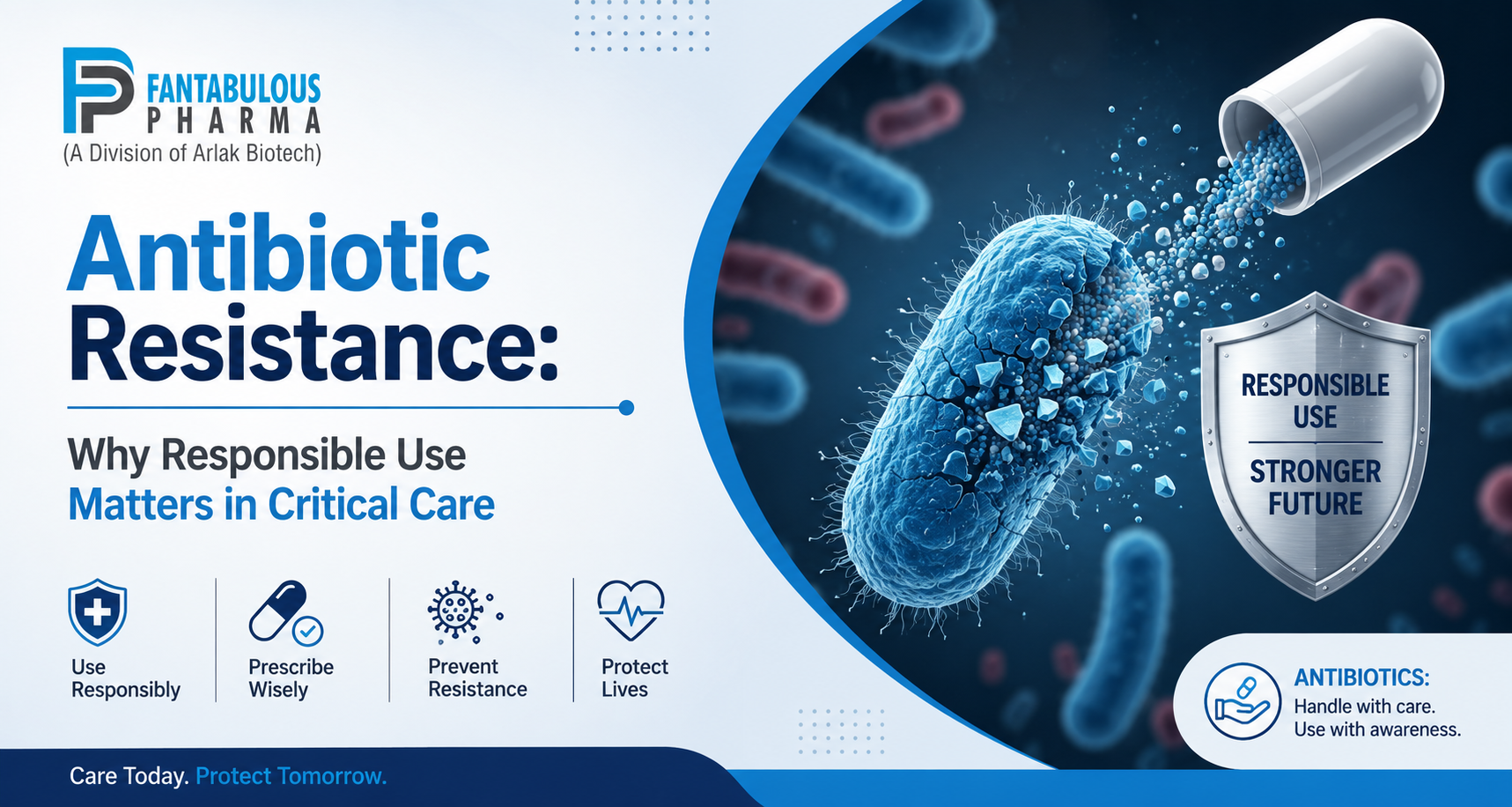
Walk into any ICU on a crowded night, and will see it firsthand — a nurse hanging a new infusion bag, a resident scrolling through lab results, a pharmacist on the phone double-checking a dosage. It's controlled chaos, and at the center of most of it are antibiotics. They've saved more lives than almost any other class of drugs in modern medicine. But here's the uncomfortable truth doctors don't like saying out loud: we're slowly running out of ones that work. That's the real story behind antibiotic resistance. It's not some distant, theoretical problem for epidemiologists to worry about. It's happening right now in those critical care medicines that hospitals rely on each single day to keep the sickest patients alive.
Bacteria are stubborn survivors. Every time they're exposed to an antibiotic and don't die, the ones that do survive pass on whatever trait helped them dodge the drug. Do this often enough — and hospitals do it constantly — and you end up with bugs that shrug off treatments that used to work like clockwork.ICUs are ground zero for this. Patients there are hooked up to catheters, ventilators, central lines — all of which are basically open doors for infection. And because these patients often can't wait for lab cultures to come back, doctors frequently start ICU Medicines before they know exactly what they're treating. It's a reasonable call in the moment, but multiply it across thousands of patients and years of practice, and you get exactly the resistant strains everyone's worried about now — MRSA, carbapenem-resistant bugs, drug-resistant Pseudomonas. Names that used to only show up in textbooks are now showing up in daily rounds.
If you've ever been in an ER or ICU, you've mostly noticed almost nothing is given as a pill. There's a reason for that. Injectable Medicines work fast, and speed is everything when someone's blood pressure is crashing or their oxygen levels are decreasing. You can't wait for a tablet to work and absorb through the gut when a patient needs help now.That urgency, though, is exactly what makes antibiotic stewardship so tricky in these settings. A Critical Care Injection given at 3 a.m. to a patient who might have sepsis can't always wait for perfect diagnostic clarity. So the pressure falls on hospitals to build smarter systems — faster diagnostics, clearer protocols, better communication between the ER and the pharmacy — so that urgency doesn't automatically mean overuse.
Here's something that rarely gets mentioned when people discuss antibiotic resistance: drug quality and availability matter just as much as prescribing habits. If a hospital can't get consistent access to the right formulation from a reliable Injectable Manufacturer, doctors end up substituting with whatever's on the shelf — which isn't always the most targeted option.This is where a dependable Critical Care Pharma Company actually makes a difference beyond just producing vials. The good ones invest in consistent quality control, transparent sourcing, and — increasingly — education for the hospitals they supply. When a hospital trusts its supplier, physicians spend less time worrying about whether a drug will even be in stock next week, and more time thinking about whether it's the right drug for this particular infection.
Most hospitals now have some version of an antimicrobial stewardship program, though how seriously they're run varies a lot. The good ones don't just hand out guidelines and hope for the best. They actively review what's being prescribed, pull back broad-spectrum drugs once test results narrow things down, and set hard limits on how long a course of treatment should run.None of this works, though, without solid Hospital Medicines management behind it. You need pharmacists tracking usage patterns, infectious disease specialists weighing in on tough cases, and a system that flags when something looks off — like a patient who's been on the same antibiotic for two weeks longer than makes sense. It's unglamorous work, mostly invisible to patients, but it's probably done more to slow resistance than any single new drug.
Emergency Medicine doctors have maybe the hardest version of this problem. Someone comes in with sepsis, and every hour of delay in starting treatment measurably increases their risk of dying. There's no time to wait for perfect information. So the instinct — understandably — is to hit the infection with the broadest antibiotic available and sort out the details later.The fix isn't to slow down treatment. It's to speed up everything else. Faster lab turnaround, better local data on which bugs are resistant to what in that specific hospital, and tighter coordination with pharmacy teams so the initial broad-spectrum choice gets narrowed down within a day or two instead of running unchecked for a week.
It's easy to treat this as a "hospital problem," but resistant infections don't stay contained. They spread. Patients get discharged, transferred, readmitted. A resistant bug picked up in one ICU can end up somewhere else entirely a few weeks later. And when it does, treatment gets longer, more expensive, and riskier — sometimes there's simply no good drug left to reach for.That's the scenario the industry is racing against. Companies making Critical Care Pharmaceuticals are pouring money into new antibiotic classes and combination therapies, but developing a genuinely new antibiotic takes years and often isn't even profitable enough to justify the investment. Which means the drugs we already have — the existing lineup of Critical Care Products sitting in hospital pharmacies right now — need to be protected, not burned through carelessly.
There's no single fix here. It takes doctors sticking to evidence-based prescribing even when it's inconvenient, hospitals funding the unglamorous stewardship work, manufacturers prioritizing consistent quality over cutting corners, and health authorities tracking resistance patterns closely enough to catch problems early.None of that happens overnight, and none of it makes headlines. But it's the difference between an ICU that can still reach for an effective treatment in ten years, and one that's stuck watching a preventable infection win. The antibiotics we have today are a finite resource — and how carefully we use them now will decide whether they're still around when the next critical patient needs them.