.png)
.png)

.png)

.jpg)


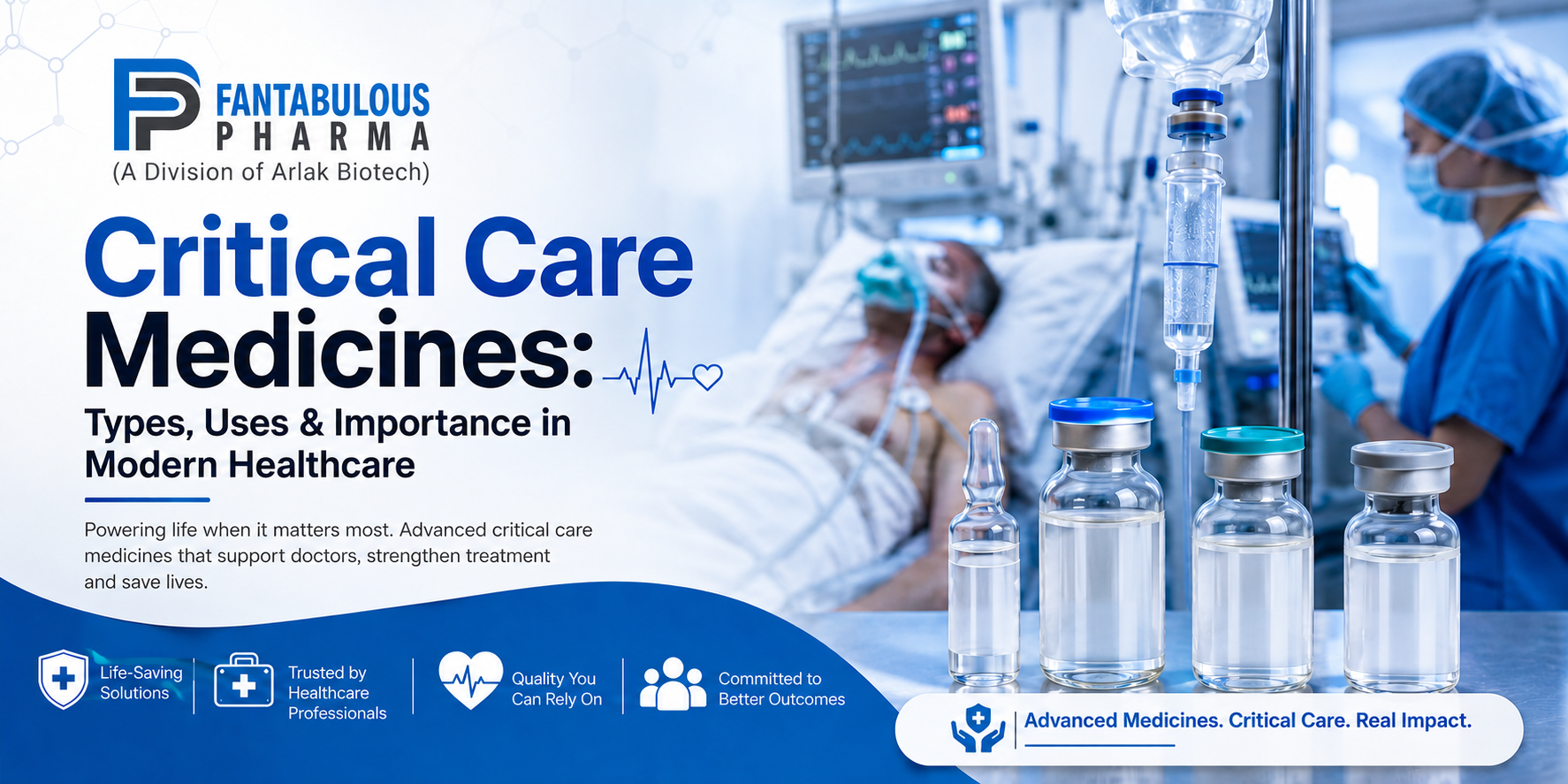
Walk into any ICU at 3 AM and you'll see it: nurses moving between beds, monitors beeping in that steady rhythm nobody ever gets used to, and IV lines carrying medications that are, quite literally, keeping people alive minute by minute. That's the world of critical care medicine. It's not glamorous, and it doesn't get talked about much outside hospital walls, but it's a big reason survival rates for serious illness and trauma have improved so dramatically over the past few decades.So what actually are critical care medicines, and why do they matter this much? Let's get into it.
The term covers a pretty wide net. Basically, we're talking about drugs used to stabilize patients whose bodies are struggling to function on their own — whether that's due to trauma, infection, organ failure, surgery complications, or a sudden cardiac event. These aren't medications you'd pick up at a pharmacy counter. Most fall under the umbrella of injectable medicines, given intravenously under constant supervision and adjusted minute-to-minute based on how a patient responds.You'll often hear this whole category called ICU medicines, which is fair since most of them live in intensive care. But they show up in emergency medicine too, in operating rooms, and anywhere a patient's condition can turn in minutes rather than days.What makes this category different from routine medicine is the margin for error — there isn't much of one. A slightly wrong dose of a critical care drug can mean the difference between stabilizing someone and losing them. That's why these medications are handled almost exclusively in ICUs, emergency departments, and operating rooms, by teams trained for exactly this kind of fast-moving decision making.
Vasopressors and inotropes are probably the most recognizable name here if you've had a family member in intensive care. Drugs like norepinephrine, dopamine, and epinephrine raise dangerously low blood pressure and keep blood flowing to vital organs during shock — septic, cardiogenic, or from severe blood loss.
Sedatives and analgesics come next. Patients on ventilators or undergoing invasive procedures need to stay calm and pain-free, and drugs like propofol, midazolam, and fentanyl handle that. It's a delicate balance — too much sedation delays recovery, too little leaves a patient distressed and fighting the equipment meant to help them.
Antibiotics and antifungals, especially broad-spectrum ones, are frontline weapons against the infections that so often accompany critical illness. Sepsis alone accounts for a huge share of ICU admissions worldwide, and starting the right antimicrobial fast can determine survival within the first 24 hours.
Anticoagulants like heparin prevent dangerous clotting in immobile or post-surgical patients, while being carefully balanced against bleeding risk in trauma cases.
Emergency cardiac drugs, including epinephrine, amiodarone, and atropine, are used during cardiac arrest or dangerous arrhythmias — the medications behind every code blue, minus the TV drama.
Diuretics like furosemide manage fluid overload, a real threat for patients with heart or kidney failure. And neuromuscular blockers temporarily paralyze muscles in specific scenarios, like difficult ventilator management, so a patient's body isn't fighting the treatment meant to help it.
Each category exists because critically ill patients rarely have just one thing going wrong — usually it's several systems failing at once, which is why treatment has to be layered and constantly reassessed.Behind every one of these drugs sits a supply chain most people never think about. A single critical care injection has to be manufactured to exacting sterility and stability standards long before it reaches a hospital pharmacy. That's where a dependable injectable manufacturer or critical care pharma company comes in — producing the sterile vials and pre-filled syringes behind the critical care products used across ICUs every day. Without that steady pipeline of hospital medicines, none of what happens at the bedside would be possible.
It's easy to take modern emergency medicine for granted until you look at what things were like fifty years ago. Conditions that were almost universally fatal — severe sepsis, major trauma, certain cardiac events — now have real survival odds, largely because of how precisely critical care medications can buy the body time to heal itself.There's also the coordination involved. These drugs aren't handed over and left to do their job — every dose is monitored and reassessed constantly. Blood pressure shifts, and a vasopressor dose changes within minutes. Oxygen dips, and sedation gets recalibrated. It's an ongoing, responsive process, not a one-time fix. Most people will never need to know the names of these drugs, and honestly, that's kind of the point — when critical care medicine works, patients recover and move on, rarely grasping how much precision went into keeping them stable.
None of this comes without difficulty. Drug shortages are a persistent problem, and when a commonly used vasopressor or sedative becomes hard to source, hospitals scramble for less familiar alternatives. This is a big reason hospitals put so much weight on working with a reliable critical care pharma company — one with the manufacturing capacity and quality systems to keep shelves stocked even when supply chains get shaky. Cost is another issue, particularly in lower-resource systems where access to newer critical care pharmaceuticals isn't guaranteed.There's also training. These medications require specialized knowledge to use safely, so the effectiveness of critical care medicine is tied directly to how well-trained a hospital's ICU team is. A perfect drug in the wrong hands, without proper monitoring, can do real harm.
Research hasn't slowed down. Newer sedation protocols aim to reduce long-term cognitive effects in ICU survivors. Antibiotic stewardship programs are trying to slow resistant infections, quietly one of the bigger threats in critical care overall. And there's growing interest in personalized dosing, using real-time patient data instead of one-size-fits-all protocols.
Critical care medicines don't get the spotlight that goes to surgical breakthroughs or new cancer treatments, but they're arguably just as important. They're the reason someone in septic shock can walk out of a hospital weeks later, and the reason a heart attack doesn't automatically mean the worst outcome anymore. Behind every recovery story from intensive care, there's usually a carefully managed combination of these medications working quietly in the background — buying time, stabilizing what's failing, giving the body a real chance to heal.And behind that, quietly, is a whole industry of injectable manufacturers and critical care pharmaceuticals companies making sure hospital medicines are available exactly when and where they're needed.