.png)
.png)

.png)

.jpg)


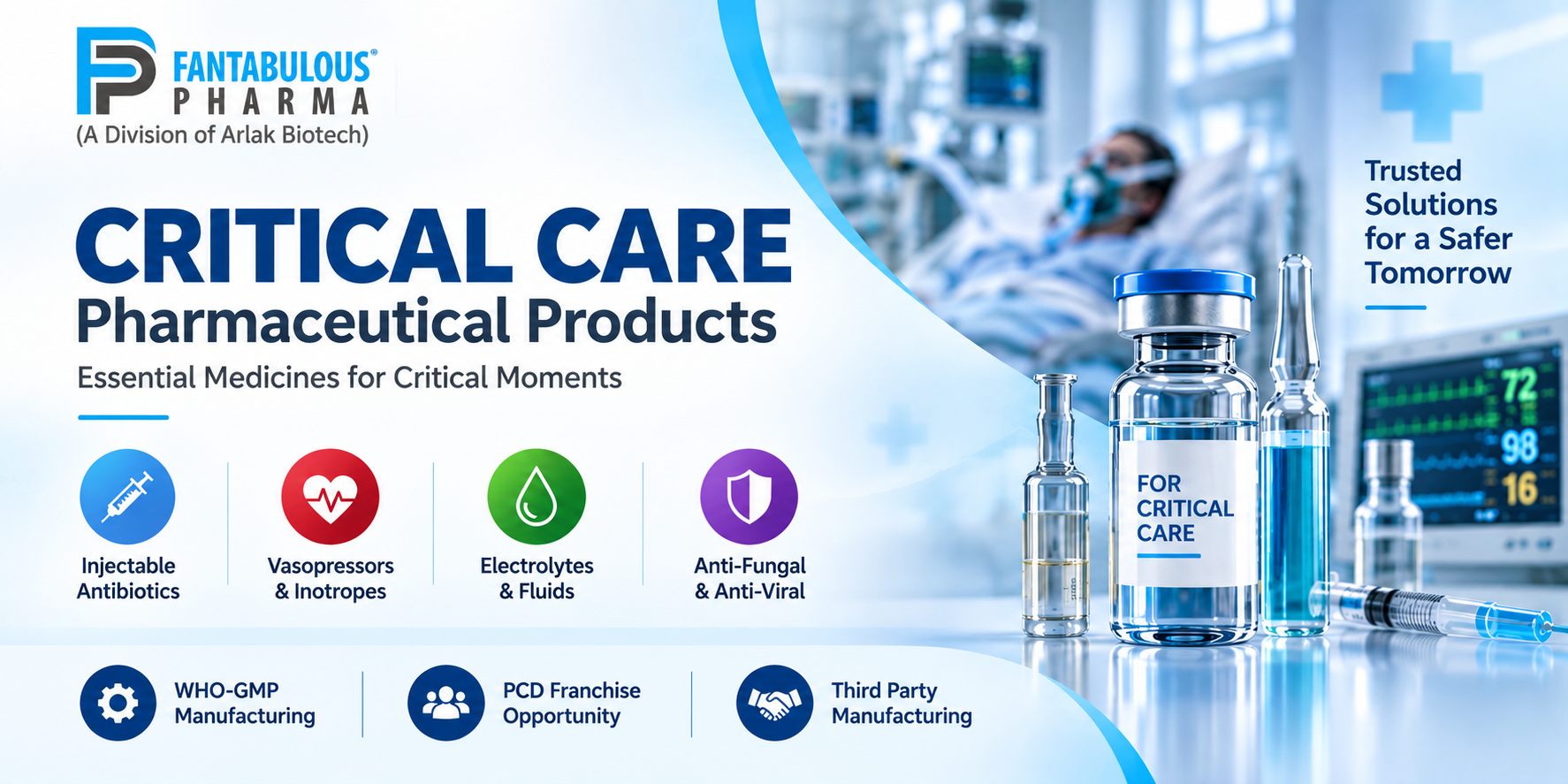
Anyone who's spent real time in pharma distribution knows critical care is a different animal altogether. You're not selling cough syrup or a vitamin range here. A late shipment, a poorly stored injectable, or a formulation that's slightly off any of that can genuinely put a patient's life at risk. That's why this segment demands a different level of seriousness from everyone involved, distributors included.
Hospital ICU capacity has grown quite a bit in the last few years, and with it, the demand for critical care medicines. More trauma centers, more ventilator beds, busier emergency wards. If you're a distributor trying to enter or expand in this space, it helps to actually understand what you're stocking, not just order because a supplier's price sheet looks attractive. So here's a rundown of the categories that matter most.
This is where mostly of the volume sits, honestly. Sepsis cases, post-surgical infections, hospital-acquired infections doctors need something strong and fast-acting, not a slow-release tablet. Cephalosporins, carbapenems, and various antibiotic combinations make up the bulk of ICU antibiotic orders. Any serious critical care medicine manufacturer is going to have a wide antibiotic injectable line, because this is what hospitals reorder week after week.
When a patient's blood pressure crashes or the heart requires a push to keep circulating blood properly, this is the category that steps in. Noradrenaline, Dopamine, Dobutamine these names come up constantly in ICU prescriptions. There's very little tolerance for batch inconsistency here. A slight variation in potency and the patient's response can go sideways fast, so this is one area where you really can't compromise on the manufacturer.
Clots, DVT, pulmonary embolism, stroke cases this group covers all of it. Heparin and Enoxaparin injections are the usual suspects, along with clot-dissolving agents used in emergency stroke management. Hospitals go through these fairly quickly, so if you're distributing in this range, consistent stock availability matters as much as the product itself.
Patients on ventilators, post-op cases, trauma admissions all of them typically need some combination of sedation and pain relief. Midazolam and Fentanyl injections show up often, alongside muscle relaxants used during intubation or surgery. A distributor offering critical care injections without a solid presence in this portfolio is really leaving money on the table, because ICUs simply can't survive without it.
This one sounds basic on paper, but don't underestimate it. Potassium chloride, calcium gluconate, and various IV fluid correctives are ordered in big quantities, almost daily in a busy hospital. It's not glamorous, but it's steady, high-turnover business.
Fungal infections in immunocompromised patients have become far more common than they used to be, and this category has grown alongside that. Distributors who can offer both anti-fungal and anti-viral injectables from one supplier save themselves a lot of back-and-forth with multiple vendors.
Stocking the right categories is only step one. Step two, and arguably the more important one, is figuring out who's actually making these products for you.
This is where Fantabulous Pharma deserves a mention. As a critical care pharma company in India, it's built a fairly solid name around WHO-GMP certified manufacturing and a product range that covers most of what's listed above. For distributors tired of juggling four or five vendors just to fill one order, working with a single reliable name like Fantabulous Pharma cuts down a lot of the hassle.
If franchising is more your thing, Fantabulous Pharma runs a critical care PCD franchise model too monopoly-based rights in your territory, along with marketing and promotional backup. It's a good fit for distributors who want to build something focused in this segment rather than treat it as a side category.
And for brands that want their own critical care line but don't want to build a manufacturing facility from scratch, Fantabulous Pharma also takes up critical care third party manufacturing work. You get your own branded injectables manufactured to proper quality standards, without the capital burden of setting up a plant.
Critical care isn't a range where you can afford shortcuts not in quality, not in supply, and definitely not in who you choose to work with. Whether you're elaborating a distribution business, looking into a franchise, or need a manufacturing partner for your own brand, knowing these categories inside out puts you in a much stronger spot when you're negotiating deals.
At the end of the day, someone's family member is on the other end of that IV line. Pick your partner the way you'd want that choice made for your own.